
Literacy Workshop 2: Developing English in a Sign/Bilingual School
Presented on Wednesday 28 February 2007

Live English Work at Frank Barnes School for Deaf Children
Mark Varley
Background
Definition
- The term Live English has been used to describe English in social and communicative contexts
- Live English is a part of the Sign Bilingual
model. It describes:
"all the strategies which deaf children need in order to communicate with non-deaf peers and adults… in social and communicative contexts"
(M Pickersgill, S Gregory & LASER 1998)
Live English at Frank Barnes School
- Work started across the school from September 1999 including a change to the start of the school day
- Previously work embedded in SLT group sessions with limited carryover


Live English
Live English work develops…
English Language
- vocabulary:
topic/ situational - grammar:
word order & tenses - Interaction:
conversations/ phrases
Phonological Awareness
- Active listening
- Lip-reading
(following speech without sign) - Voice and speech skills
- Rhyming skills
How it works in practice
Who?
- SLT plans and delivers jointly with teaching staff
- Children are involved when class teacher and SLT feel they may benefit from inclusion in the group
When?
- 1x session weekly with SLT + teacher/ teaching assistant
- Class teacher then delivers 2x weekly follow-up sessions
- Usually blocks of 6 weeks
Where?
- Classroom based
- Outings as appropriate depending on the topic
Linked to class topic
Overall aim is to prepare children for “real life experiences” in the outside world. These could include:
- Works on different aspects of communication all together in a functional way, eg; FSWS, lip-patterns, voice and speech, listening, English : grammar, social aspects, vocabulary, cultural awareness
- Communication strategies run through all modules
- LEAP – Live English Activity Pack
How it works in practice...modules
- Over past 2 years modules have been developed and put into practice
- Modules aim to link to the class topic and involve a functional skill
Example of module
Year 3 topic, "London then and now"
- Topic web: Investigating our local area, London transport, London landmarks
- Link with functional skill of asking
for directions
- 6 week plan
- Parents information and carry over work
- Gradual build up of skills and confidence to prepare for an outing into London
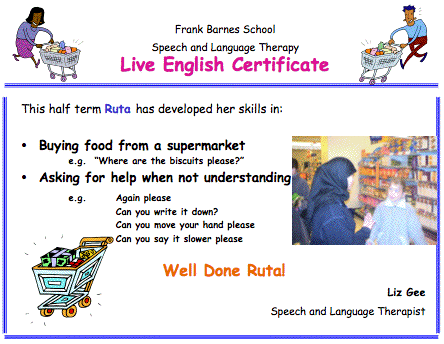


Challenges
Assessment of outcomes:
- Time for Development
ie more systematic approach - Timetabling
where does it fit in
time for carryover - Modality
Balance between SSE/BSL/Spoken English - Joint working
Have different expectations and priorities - How to generalise
Daily life - both in class and outside school - Realistic Expectations
Managing social/emotional effects
Successes
Working with the children
- Successful approach to develop lipreading/functional listening and spoken language
- Developing functional/practical life skills - holistic
- Improving confidence
- Providing experiences and opportunities they may not have outside school
Working with Parents
- Positive views/feedback
- Easy to communicate/explain – easy for parents to grasp
Working with school staff
- Profile in school – demystifies our work
- Clarity of role
Job satisfaction
- Feel you are doing something useful as SLT
- Good fun!
Future
Assessments
Communication Profiles
Working with School Staff
Live English Curriculum
Research
- evidence-based practice
Working with others
- ie other schools
Technology
further use of whiteboards/internet