Webinar: What Works? Identifying Effective Practice for Deaf Autistic Children
Presented on Tuesday, 6th October 2026

Presented on Tuesday, 6th October 2026
Number of Participants: 200
Number of Respondents: 34
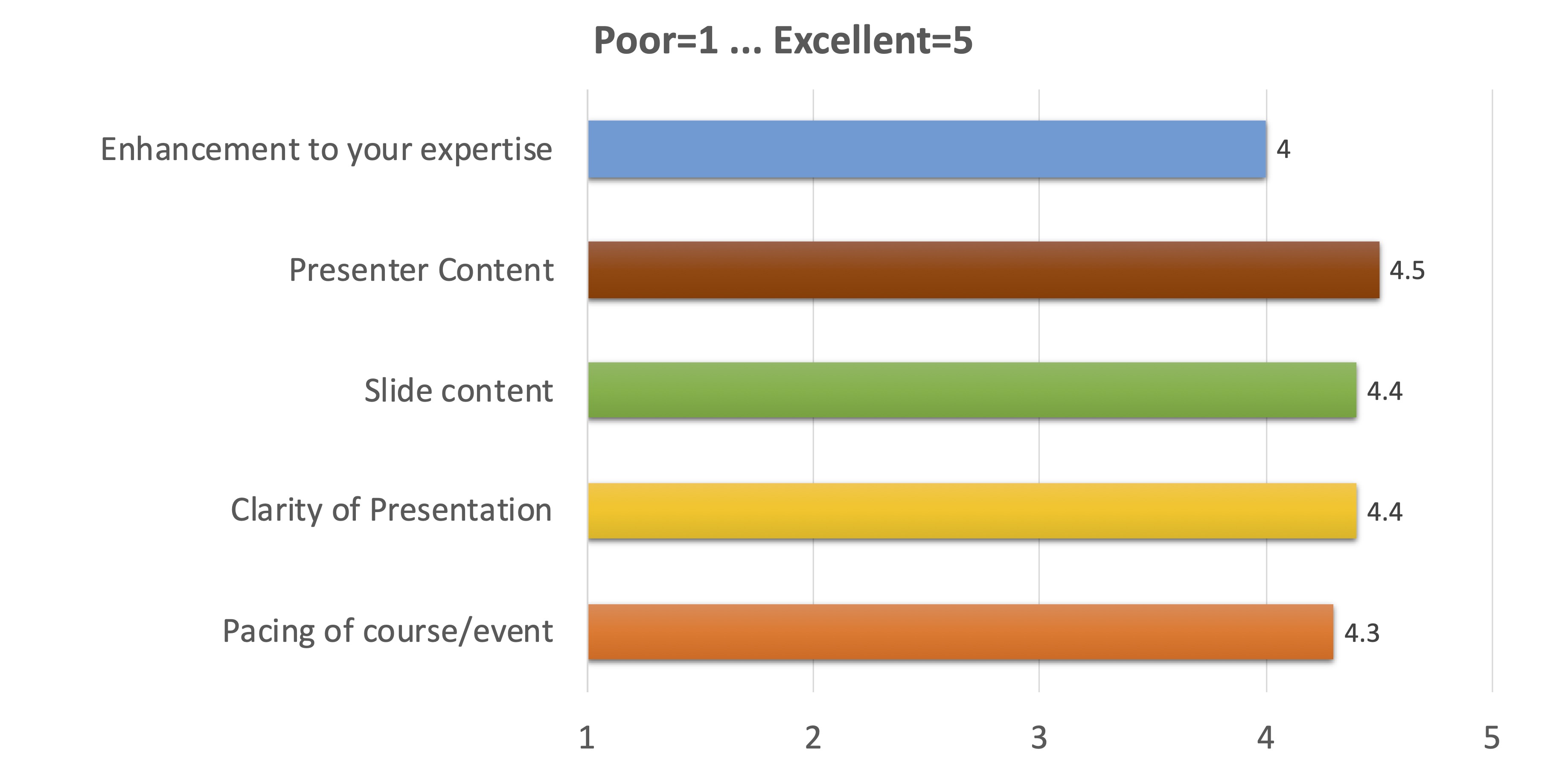
Great information and research shared.
Research that links directly to what we do in classrooms and schools is always valuable!
Presenter expertise and passion.
The results of new research in an area with a dearth of research.
Emphasising that we have to focus on both together rather than each aspect separately.
Gaining an understanding of the most up to date research in deafness and autism. Also good guidance about approaches that have proven effective, based on case studies.
It was a thorough explanation of this piece of research.
The breakdown of the information provided.
Openness and expertise.
Informative research.
Strategies to support deaf children with autism. The take home message.
Getting an overview of best practice from research.
It was a useful overview of a small piece of research.
Professional focus.
Very informative to share with colleagues.
The opportunity to benefit from such a wealth of knowledge and expertise!!
Very useful for my practice as I have a good number of my students with the dual diagnosis.
Made sense, realistic and child centred.
The research which was shared and how it was presented.
Giving tools for effective practice.
Very clear and informative presentation style, well structured.
The clear and concise results of the study and how this was presented. The sincerity and enthusiasm of the presenter.
Clear structure to follow, lots of information but clearly presented, practical application.
It reassured me that my team are doing all the right things to support our deaf autistic learners. Also reassuring to know that more research is being done on best practice for working with deaf autistic leaners.
Very informative.
Having the data and research for leaders. The reinforcement that child at the centre not fitting the child into the model.
I found very interesting the subject of the webinar...deaf autistics' educational approach can be very challenging and I lack knowledge.
Slides.
Excellent research-based ideas and information.
Highlighting new research.
Coherent description of research undertaking and of findings.
The layout of the slides with the key message to summarise at the bottom.
Openness to questions.
Thank you for making the recording available - I was unfortunately unable to attend on the day so it was really useful to be able to come back to this at another time.
Nothing.(12) Everything was there.
Case study examples of approaches (more detailed).
Links or recommendations to resources for staff to use with deaf autistic students.
Opens up more and many questions so maybe further webinars around this!
Nothing. It was informative, interesting to hear about the research and great to have a talk about this.
More practical strategies for teachers to use - perhaps this could be another webinar as I think a booklet for good practice is going to be developed as well at some point.
I think this was a good summary of the research. I would have liked to know if the person who did the observations had experience with deaf autistic children and could use BSL herself to a fluent level. This would help us make sense of the observation data.
Some more practical advice for parents maybe.
A follow up to look at approaches to Preparation for Adulthood when working with Deaf Autistic CYP. I am based in specialist FE provision, so additional approaches for older age groups would be beneficial.
The webinar covered everything for me for now.
It would be good to consider how to approach achieving this holistically, ie starting from a strengths based position as part of an iterative improvement process.
For the slides to be circulated shortly before the webinar rather than afterwards to allow for slides to be printed for annotating while listening.
More practical advice - ideas of different things to try. Unfortunately I didn't learn anything new at all from this presentation. It was also very fast paced, with lots of tiny writing to read on the slides, and no visuals - it wasn't very accessible or inclusive.
Possible more info on case studies of examples.
I would really like further information about this subject.
More practical/innovative tips. Using resources such as numicon was mentioned- this is standard classroom practice.
More practical strategies.
The name of this webinar was misleading - I was expecting to be given tangible examples and resources for effective practice (i.e. what works) not be told in generalised terms that we already know and about the methodology. The presenter admitted herself that the content probably wasn't what we were expecting.
How this work differs from any other work on good practice in education.
Perhaps the voice of the Deaf autistic pupils themselves. Maybe I missed it as the pace was quite fast and I found the presenter's accent difficult to understand as I have a hearing loss myself. Perhaps it was not part of the original research.
DLD and deafness.
Deaf children with additional needs / MSI.
More practical examples of what teachers can use in school around this topic.
We don't have a Deaf CAMHS service in Scotland (or Wales). Deaf autistic children often need this service to receive a proper diagnosis. I think more about the diagnosis process would be helpful not just for ToDs but also for parents.
Anything more regarding Autism. Practical advice around supporting a child with Downs Syndrome and conductive hearing loss.
Best practice and effective working in mainstream settings particularly as this is my local context.
Further support for deaf autistic children.
Using AI with deaf children.
Hearing technology.
Training on how to best engage parents as equal partners in education.
Anything about special educational needs.
Seriously subject specific research and advice.
SSC direct email: 12
Colleague: 4
SSC Website: 6
SSC Bulletin: 6
University of Birmingham: 5
BATOD newsletter: 2
Line manager: 1
Regional group: 1
Ewing Foundation: 1

Opt out of Google Analytics cookies · Add/Update/Remove Your Contact Details · Privacy
© 2026 Scottish Sensory Centre, Edinburgh