SSC Webinar: Intensive Interaction
Not being able to speak is not the same as not having anything to say
Presented on Tuesday, 7th December 2021

Not being able to speak is not the same as not having anything to say
Presented on Tuesday, 7th December 2021
Number of Participants: 43
Number of Respondents: 12
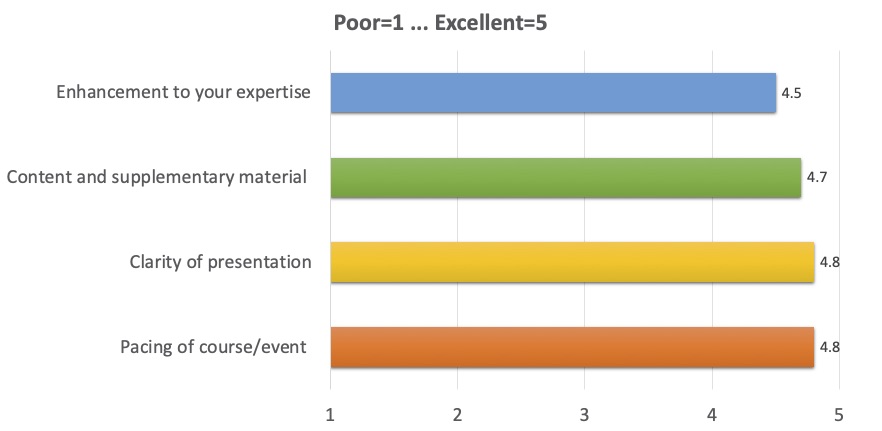
This has reminded me of the process and also the links to sensory processing.
I am fairly new in role and the use of II concept but hopefully will be able to support use of some of the shared strategies
Approach II with greater confidence.
Yes, take time to observe subtle noises, movements and stimulus in children.
Not immediately but useful for pupils not yet worked from.
Be more confident in implementing II and sharing with my ELC settings as Early Intervention Teacher
This will become an integral part of our plans to readdress the importance of Intensive Interaction - especially the information on working with those with VI.
Implement Intensive Interaction techniques with more pupils.
I'll maybe try copying a child's breathing in order to communicate with them.
Offer undivided attention to speaker (child with whom I am engaging); refrain from discussing child, in front of child, with another adult; increase amount of imitation; take more time to consider why a child may be exhibiting a certain kind of behaviour; step back when it may be possible child has had enough; consider whether child's behaviour is an attempt to communicate and what they may be trying to 'say' become a more vigilant observer and concentrate on locating any possible micro levels of demonstrating preferences.
I will create a reporting format so intensive interactions are recorded and evaluated.
This webinar was a good refresher for my daily practice. Allowing pause time and permission for the child to end the interaction is something I need to consider.
I enjoyed the video clips as it gave very clear examples.
Listening to others experience thoughts and ideas also the enthusiasm demonstrated.
Providing the stages.
Lots of strategies given and videos of examples.
The short clips shown - allows me to know I can look at II in practice - I learn better that way.
Excellent knowledgeable speakers.
The videos, the break out chats, the detail, the written chats on the side and how quickly they were addressed - especially answers from Elizabeth Mc Cann whose specialist knowledge on VI was invaluable... and the lovely Scottish accents which we Londoners enjoyed!
The videos were really helpful to actually see intensive Interaction in use. Really nice to see how the children were responding
Video clips demonstrating intensive interaction which highlighted the presenters presentation.
I would say the inclusion of the videos - I have always found that watching practice as opposed to reading or listening about the theory is always beneficial. Chats from other viewers also valuable.
Looking at the different examples of II in practice.
It was easy to relate to my daily practice, reinforcing that I am doing the right things.
I felt it could have been half an hour more to make full use of the break out spaces.
A few IT issues on and off not sure they could have been resolved though.
Examples/videos of its use with younger children.
Longer course to include more content, time to process content.
Perhaps a little more time allowed as parts had to be shortened to fit in.
Nothing.
Have a coffee break earlier. And the email came late so we missed the intro as (like a number of other people) we were waiting in a webinar linked to the first web link.
There was much focus on learners with ASD. I would have liked a more varied selection, more children with sensory impairments such as deafblind infants.
A count down when in break out rooms as we were cut off midsentence.
SSC direct email: 5
Line Manager: 4
Colleague: 1
SSC Website: 1
Elizabeth McCann: 1
Area of interest is early development in VI so anything on this topic would be good.
Would be interested in any sensory related topics.
Language difficulties and delays.
Anything is welcome!!
Do you do training for staff in a VI school on Intensive Interaction?
Supporting - not only assessing - children with complex needs and VI. Sharing and discussing of individual support programmes for such children.
How would you rate the webinar technology? 4.0/5
Not so familiar using collaborate and had to link on my phone as unable to access on laptop due to unavailability of recommended browser
None. (3)
Not a platform I use elsewhere and wasn't sure it was best when in breakout rooms.
As stated there were 2 links and so this made the start confusing.
Unable to access though Blackboard (blocked by our organisation).
Just the count down timer for breakout rooms.
I started watching the webinar on an i-Pad but could not see, only hear the videos so had to log onto a school computer, which allowed me to watch the videos. The computer has no camera or microphone for break out rooms so needed to use a mixture of both pieces of technology!

Opt out of Google Analytics cookies · Add/Update/Remove Your Contact Details · Privacy
©2022 Scottish Sensory Centre, Edinburgh